Beau Choix

Supporting your beautiful choice
  • Home
  • Services
    • Reiki and Crystal Healing
    • Bengkung Belly Binding
      • Bengkung Belly Binds
    • Yoga Nidra
      • Yoga Nidra Pregnancy Meditations
    • Breastfeeding
    • Birth Doula
    • Postpartum Doula
  • Classes
    • Childbirth Preparation Class
    • Breastfeeding
  • FAQ
    • Resources
    • Newsworthy
  • About
  • Contact
  • Blog

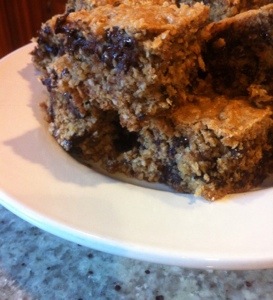
Lactation Cookies

November 30, 2013 by Angela Leave a Comment

20140109-222340.jpg

My favorite lactation cookie recipe came from a blog that is no longer online. Since I was always making my own tweaks I’m posting my own recipe. When it comes down to it, it’s a rev’ed up oatmeal chocolate chip cookie. The recipe is based on ingredients that have some known lactogenic properties. Lactogenic means that it may help increase milk. I make no claims that these cookies will boost your breastmilk supply. If you are having breastfeeding problems please seek the help of a local breastfeeding professional. This is also not a diet food. They are cookies, ’nuff said. If you’d like to share this recipe please link back to this post.

A Momma’s Treat

Use organic ingredients when possible.

4 tablespoons Water
2 tablespoons Ground Flaxseed Meal – do not substitute
1 cup Unsalted Butter or 1/2 cup Unsalted Butter & 1/2 cup Coconut Oil**
1 cup Sugar
1 cup Brown Sugar
2 large Eggs
1 1/2 teaspoons Vanilla
2 cups Unbleached Flour
1 teaspoon Baking Soda (aluminum free if possible)
1 teaspoon Sea Salt, Pink Himalayan Salt is best
2 tablespoons Brewer’s Yeast – do not substitute ***
2 tablespoons Nutritional Yeast (optional) ***
2 tablespoons Hemp Seeds (optional)
3 cups Oatmeal (Steel Cut not recommended, but any other variety works well, the less processed the better)
1 package Dark Chocolate Chips

Additional add-ins:
1/2 cup dried fruit (I love cherries or cranberries) or
1/2 cup chopped nuts or
1/2 cup toffee chips

Preheat oven to 350 degrees
In a small bowl, mix flax seed meal & water, set aside. Flax will absorb the water & look a bit fluffy. About 3-5 minutes.
In a large bowl sift all dry ingredients together except oatmeal & chocolate chips. Set aside.
Cream butter (or butter and coconut oil) , sugar and brown sugar with a mixer until light & fluffy.
Add eggs one at a time & beat well after each addition. Scraping down sides of bowl as necessary.
Add flax seed/water mix. Beat well.
Add vanilla. Scrape sides of bowl.
Slowly add dry ingredients to butter mixture a little at a time.
Add in oatmeal, then chocolate chips & any other additions.

Drop teaspoon sized amounts onto a parchment lined or silicone lined baking sheet. Bake for 12-15 minutes. You can make them bigger but be sure to increase baking time.

Yields about 4 dozen cookies

If making bars increase baking time to 25-30 minutes. Bars are finished when a toothpick inserted into the center comes out clean.

**if using coconut oil spread the batter into an 11×13 pan for bars. The finished product will be too soft to stay in a cookie form for very long especially if freezing the finished product or transporting.

***Nutritional Yeast, Brewer’s Yeast & Baking Yeast are 3 different things. They are not interchangeable.

Filed Under: breastfeeding Tagged With: baking, breastfeeding, cookies, lactation

Breastmilk: The Movie

October 28, 2013 by Angela Leave a Comment

Last night was the much anticipated Washington DC premiere of Breastmilk: The Movie from first time director/producer Dana Ben-Ari and executive producers Ricki Lake & Abby Epstein hosted by Claudia Booker – Birthing Hands of DC.

Claudia introduced the film as a cautionary tale inviting us to think as we watch, not just about breastmilk, but about the support around breastfeeding mothers. She said that we need to bring in our partners, our men as vanguards to breastfeeding because it takes a family to raise a baby no matter what that family looks like. Yes, we need to surround ourselves with the women in our life, but our partners need to be educated about breastfeeding and support of breastfeeding. Who is  usually with us at 3 a.m. when we are trying to latch our babies? Not very many of us are lucky enough to have our mothers, sisters, aunts near us and if we do how many of the women in our lives who birthed before us actually breastfed a baby? There are generations of women who don’t what normal breastfeeding looks like. As so many of us know, there are well meaning people in our lives who unintentionally throw roadblocks into our breastfeeding relationships.

The emphasis on breastmilk as opposed to breastfeeding is clear in the opening scenes of the movie. The first image is that of a breast being expressed by a pump. This is a clear reflection of the breastfeeding culture in the U.S. today. Women talk about breastfeeding and breastmilk feeding as though they are one in the same. So much emphasis is put on pumping, not expression, but pumping. “Have you bough your pump yet? What kind did you get? When are you going to start pumping? How much should I be pumping? How often do I pump?” As much as women know about pumps we don’t know enough about normal breastfeeding. Isn’t this what should come first? Do you know that manual expression (not with a manual pump but with your hands) is often more efficient than a pump? This is true especially in the early days and weeks of breastfeeding! But how many classes teach manual expression? I know I’ve been guilty of teaching about hand expression, but not necessarily teaching the technique. What about breastfeeding? What does normal breastfeeding look like? Why does the baby have a witching hour in the evening? Do you know that watching the baby not the clock will tell you how often your breastfed baby needs to feed? It’s ok for baby to want to put their hands in their mouth when it’s time to feed. It’s ok if your new baby wants to feed every 90 minutes. Breastfeeding is not supposed to hurt. Pain is not normal and is an indication that something with the baby’s latch needs to change. Breastfeeding a baby after eruption of teeth is normal. Breastfeeding a baby past a year is normal. Tandem feeding is normal. Breastfeeding in public is normal Who is talking these aspects of breastfeeding? In my opinion, not enough people.

The movie show many of the interruptions women and babies have while they are trying to learn to breastfeed, especially in the hospital.  Mairi Breen Rothmann who spoke after the movie quoted a study I’ve heard before where women who birth in hospital are interrupted an average of every 17 minutes! If a newborn feeding session (positioning, latching, re-latching, re-positioning, feeding) takes about 40 minutes, she’s interrupted 3 times in that one session.  This only stresses that the Golden Hour after birth needs to be protected and revered so that the initial feed happens without interruption and subsequent feeds are easier for everyone.  Babies should not be taken from their mommas to be bathed early in this relationship, certainly not taken away for hours on end creating anxiety and doubt for the mother. They need that smell of amniotic fluid on their bodies to help them organize and find the breast, to properly colonize with momma. There is one hospital in this area I know categorizes babies as hazardous materials if they have not been bathed and the staff are required to wear gloves to handle the baby.  A grand policy in my eyes, only the parents should have hands on the baby.

The shape and shade of the families is phenomenal.  It’s not a movie about the typical middle-class white, husband and wife breastfeeding couple. There are families of color, adoptive families, same sex families, single parents, working parents, stay at home dads, you name it. Subjects discussed through the movie include extended breastfeeding, milksharing, formula feeding, tongue tie, induced lactation, going back to school or back to work, pumping, relationships, sex and intimacy, public breastfeeding and many worries about milk supply. So much is packed into  a short 90 minutes. And I haven’t even touched on the experts who share all kinds of information surrounding breastfeeding.

Many of the interviews take place in the bedroom of the families, on their beds. It’s very warm and intimate. The opening scene of the trailer is just that, an interview from the bed. This particular couple crack me up! Even with this humor there are elements of guilt, shame, embarrassment, failure as well as immense pride and joy. The emotions run the gamut.

The biggest surprise for me was the outcomes as they follow the families for a year. I think you will be surprised too.

I hope this film will serve as another jump-start to the conversation about breastfeeding in the United States. We need a change in the culture of breastfeeding for the health of our children, our society, our health care system, our future.

Some of my favorite clips are in the trailer. Watch it here.

Filed Under: Attachment Parenting, breastfeeding, Review Tagged With: birth, breastfeeding, Breastmilk The Movie, parenting

What is Perfect?

March 12, 2013 by Angela Leave a Comment

A beautiful photo of a breastfeeding mother with the caption The Perfect Latch [sic] caught my eye this week. Ok I won’t lie; most photos of this nature catch my eye but this one made me stop & think. The latch did look nice from a lay person’s perspective, but I could see things mom could tweak to make it better. If the mother was comfortable with the latch & the baby was having good intake, then there’s no reason to change it.

As a bystander, how do we gauge if something is perfect & should we even express that sentiment? What do we really know about that breastfeeding dyad? Has that mother struggled with breastfeeding issues in the past? Perhaps her latch was causing a little pain when the photo was taken but she didn’t want to say so because she was told how perfect it was so why should she say anything?  This happens so often in the hospital after birth. A well meaning nurse comes in & sees those beautiful outturned “fish” lips on a baby who is having a feed & tells the mother how perfect a latch it is, but the mother says it hurts. The nurse tells her to give time, however there is an underlying issue you can’t see without further investigation, more questions, more time talking with the mother.  So this mother goes home having nipple pain, perhaps baby isn’t gaining quite enough. By the time she goes to the next pediatric appointment she has painful cracked nipples, a baby who looks like it isn’t gaining weight well, is told to supplement with a breastmilk substitute & use nipple shields until her nipples heal. Is this a fix? No, not at all. All because someone said that latch was “perfect”. And the cycle begins.

The same thing can be applied to birth. A doula says how perfect a birth this mother had, but the mother is questioning things that happened during or after her birth & is battling with postpartum anxiety during her babymoon. (Yes, there’s postpartum anxiety.) Only the mother can label her birth.  No one else should color her birth story for her.  Instead she should be asked about her experience & we should just listen. No interjection about how awful or wonderful someone else’s birth was, including our own. Just listen.

Parenting falls in the pitfall too. “I don’t know how you do what you do, you’re SuperMom!” is said to a mother who is running her children to all their schooling & activities, perhaps works or volunteers as well  (or both!) & is also trying to keep house & the family fed & happy. But at night she collapses because she is utterly exhausted & isn’t sure how much longer she can keep going this way because she doesn’t have enough support knowing she’s doing too much. She already knows she doesn’t know how to say No. She doesn’t feel like she can change the status quo without causing more issues that will have to deal with in the aftermath.  Then there is the mother feels like she needs to do as many things as SuperMom does, but she really can’t do more either. It’s classic keeping up with the Jones’.

We all get caught in the cycle when what we need to do is help one another break free.  Leave the labels to the packaged goods & let’s go find our tribes.  You are welcome in mine.

Yours in Birth
Angela

Filed Under: breastfeeding, doula, Parenting, Pregnancy Tagged With: birth, breastfeeding, doula, parenting

My 10 year old sling

July 30, 2012 by Angela 2 Comments

Maya Wrap unpadded extra long

This is my sling that has lasted 10 years and 3 children. It’s my woobie.

I took all the kids out after lunch today to run errands. We made it to the post office before my almost 3 year old took the hand of my almost 10 year old in the back seat of the car & fell asleep. This is a heart exploding moment as it is.

We decided to go ahead to our next stop.  I brought out my trusty sling. And then it hit  me – this sling is 10 years old. It has carried my oldest as a toddler & my next 2 babies since they were newborns until they were well into toddlerhood. It has seen so much work in so many countries in so many different kinds of weather. I’ve breastfed and fed cookies (fishing crumbs out of my bra every step of the way) & had a snack for momma too. So many hours of sleeping babies in this sling. I’ve had prenatal & postnatal appointments with clients, teaching breastfeeding, babywearing & cloth diapering classes in this sling. Playdates, parties, shopping, cooking, baking, laundry, moving, packing & unpacking, pta meetings, volunteering in the classroom, support groups, vacations & walks, many many many walks. The list is endless.

I bought 2 crappy, really crappy box store excuses for babywearing devices when my oldest was born. Such a waste of money, frustration, time and fabric. But I knew there had to be something better out there. She was a baby you just couldn’t put down. I knew babywearing worked but I had tried to save money & cut corners in the wrong way. These didn’t work for us. I could have easily made my own sling but wasn’t confident enough until much later.

When I was pregnant with my 2nd baby I found the right people to talk to and the right place to look at what I call a real sling. And so, I bought my sling, my Maya Wrap.  It has been, & always be, my go to. So easy to slip  on,  slide a baby in & just keep on going.  The learning curve was minimal & within days of my 2nd baby being born I felt like an old pro. And I wore him for 3 1/2 years.  The last time I remember wearing him was when we were in Rome. He was sick & we had a tour of the Vatican scheduled. We decided to try it & I would go back to the hotel if things deteriorated. My trusty Maya Wrap was at the bottom of my backpack. He decided he needed to hap as his fever ramped up again. At 3 1/2 & a good 35 lbs or so he curled up on my chest, the sling came out & he slept through the entire tour. I don’t remember how many hours it was, but it was quite a few. He woke up, his fever broke & we  continued on the day.

Today, as baby #3 snoozed away while we shopped for school supplies I kissed her little head in the same place it’s been for the last almost 3 years, just below my chin. Right where all babies should be – close enough to kiss. I realize these times are fleeting & I don’t know how many more there will be, but I will cherish every single one of them. I’m so grateful that I didn’t give up on babywearing.  It’s made my life so much easier, and so much easier for my children to be where they wanted to be, where they needed to be.

I’ve expanded my babywearing library to other wraps, slings, pouches  & soft-structured carriers, and I love them all for different reasons. But my hand always goes back to this sling. There’s not a thread popped  & it’s soft with years of use.  Sure it’s a just a tad bit faded, but I know this, when I am blessed with grandbabies, this will be the first thing I pull out to snuggle the next generation of our family.  Soft, warm, fuzzy little heads resting under my chin.

Filed Under: Attachment Parenting, babywearing, breastfeeding, Parenting Tagged With: baby, babywearing, breastfeeding, growth, illness, parenting, pregnancy, toddler

What you know

May 7, 2012 by Angela 1 Comment

As in many professions, when someone finds out what you do for a living,  a story comes out &/or you are effectively pumped for information. For birth professionals, it is inevitably a story dump – a disappointing or traumatic birth, bad hospital stay, inability to breastfeed, you name it, it all comes out.

What I’ve discovered is that most moms just need validation. Simply, “You did the best you could with the information you had.” This is not a  condescending pat on the head. It’s a rare for a mom to hear this simple phrase from anyone. What is more likely to happy is the person listening breaks into their own tirade. More about that in a minute.  We all find out more information we could have used  for a birth, breastfeeding or parenting experience after the fact & then are guilty of beating ourselves up later for it (hand held high here). We have to break this cycle.

But how do we do this?

Let the experience be what it is & let it go. Debrief with a trusted person who isn’t just going to be your bobble-head.  It may take some time, allow yourself that time. Be gentle with yourself. Learn from it, but don’t dwell on it. This is not the one experience that will define you as a parent if you don’t let it. Rather, use it to shape what is to come. Share your story, but not as the scary Oh-Em-Gee story you tell to every pregnant or new mom, at every baby shower, at every gathering of moms. This practice infuriates me. People gather to celebrate a birth but then use it to play “My story is worse than yours”  or  “This will be the worst experience of your life”. Why? There is enough misinformation & fear-mongering.  Rather, tell your story to gently educate others. Explain what you have learned. Pass your experience in a way that can help someone else avoid the same situation.  Finally,if you know your experience has left you with post traumatic stress, find a professional who specializes in this work to counsel you through your experience. This is a real condition and it requires real help.

If you intend to have more children, research, research, research before your next birth. Do not just rely on anecdotal information, hospital based childbirth classes, mainstream websites & books. Seek out all the information you can find. Go beyond your comfort bubble. Pay for a private educator who isn’t going to give you the hospital party line. Look for evidence based information – there is a difference.  A couple of  good places to start: Science and Sensibility and Childbirth Connection.

Research your care provider & birth location. You cannot expect a hands off, physiologically normal birth from a provider who is known for highly interventive practices. It’s just not going to happen. You cannot change them. Same goes for birth facilities. If you want to use water during labor or a water birth, you can’t choose a hospital with tiny, regular sized American style tubs it’s simply not possible. If they will not allow you to have your choice of support  people, or allow your preferred comfort measures that is a Big Red Flag to look elsewhere. A couple of great sites to do research: The Birth Survey and Cesarean Rates. Also, look to your state’s Department of Heath vital statistics to see an overall snapshot of the births reported around you. Virginia’s can be found here.

Set your support team in place during your pregnancy. Hire a doula. Yes I’m obviously biased, but the evidence is out there for you to see in black & white. Don’t forget your lactation team for breastfeeding support, postpartum doula after your birth, know your area resources for postpartum depression, massage therapy, cranial-sacral or chiropractic care, area mother’s groups, etc. Even if you don’t need them or use them, do your research so if you do need any of them you know exactly who to contact. Too often a mom realizes she needs help & is so overwhelmed she doesn’t know where to start. I’ve lost count of the number of times I’ve gotten a tearful phone call from a mother or a frantic call from a father looking for breastfeeding help NOW.

Which brings me to my next point: don’t wait until the last minute to call for help. If it looks like you need some help, pick up the phone before desperation sets in. You’re not bothering anyone. That line about it takes a village, it really is true.

“What if I can’t afford it?” Do you really need or want 12 packages of bodysuits & socks, 2 dozen plastic electric toys the baby isn’t going to play with anyway, a bunch of matchy matchy outfits that the baby might wear once? Be upfront about what you do need and want. Ask for donations to your doula or breastfeeding fund at your shower, a gift certificate for a postpartum massage, ask for your friends to bring their local resources to your shower. People really do want to give you what you need, but will default to the big box baby store if you don’t tell them. Also, many doulas and other birth professionals are wiling to barter or to work on a sliding scale. Many don’t advertise this, but if you ask they will tell you.

The more prepared you are for birth & postpartum, the more positive your experience is likely to be. Yes it’s work, but so is parenting. Give yourself the tools to get there. You are worth it.

Filed Under: birth, breastfeeding, doula, Parenting Tagged With: advocacy, birth, breastfeeding, doula, education, pregnancy

Glossy Prints

March 5, 2012 by Angela Leave a Comment

I went on a tour of the Women’s Center at a local hospital recently & was given a folder of information related to their pre & postnatal services.

There a sheet listing the agenda of the tour, and a brochure of their childbirth education offerings. The tour is a rattling off of hospital procedure. If you need any in-depth answers, don’t ask the tour guide. If you’re not planning a “normal hospital birth” but a physiologically normal birth you will make the guide quite nervous. It’s clear that not many people just give birth.

Much of the rest of the folder is focused on breastfeeding.  I thought, “This is better.”

That is until I sat down & looked at it all.

It was wonderful to see all the support they have set up for area women, but it is far from making breastfeeding normal. There is a lot of information about support, support groups, classes, pumping & where & how to buy or rent pumps. So many gorgeous glossy pictures of beautiful babies. Only one of a mother very very discretely breastfeeding her baby.

All the support is great, but without the depiction of breastfeeding being normal the message is lost.

My region is filled with support & some really great resources. I’ve lived in many places where this isn’t so. Regardless of where you live, it’s very important to search out all your options before you are in the throws of labor & realizing that your birth plan can’t be & won’t be followed because the facility you’ve chosen has a completely different definition of normal that is not the same as your own. Make sure that your care providers, birthing facility and after support are fully vested in you. Some issues can be solved through self advocacy, but you shouldn’t have to fight uphill when you should be completely zoned out in Laborland or  blissfully snuggling your new baby. You shouldn’t be worrying about what you have to give up to get the care & support you need & deserve.

You Are Worth It.


Filed Under: birth, breastfeeding, doula Tagged With: advocacy, birth, breastfeeding, doula, parenting

Latch is where it’s at

February 22, 2012 by Angela Leave a Comment

The principles of breastfeeding have been brought to the forefront of my own breastfeeding experience once again.

If you’re a breastfeeding mother you’ve heard all about & probably know first hand just how important latch is. It’s one of the first things taught in breastfeeding class. It can be one of the hardest things to get right. It’s objectively subjective – meaning you can give great detail about how to do it with all the evidence based information available, but how the information is taken in and  applied varies from each mom/baby dyad. Mom or baby can change the equation in less time than it takes to say “OUCH!”

You know all about my most recent experience if you’ve read this post. Third baby, disastrous start to breastfeeding.  She’s almost 2 1/2 years old now you’d think we’d be completely past any issues. But I’m here to tell you all it takes is one night.

My sweet girl had a cold. Not a bad one, just a cold.

And then came the first night. After we both had fallen asleep, the stuffy nose started. Suck suck suck, breathe. Frantic latch, suck suck suck, Breathe. ** lather, rinse, repeat all night.

After that first night I was sure I had woken up with a newborn who had torn my nipples to shreds. The damage was done. We used saline & the ever popular (NOT!) nose sucker but she was still very snurfly.

This has gone on for many many nights until just the last couple.

Why am I telling you this? All it takes is one time, one really bad latch & the breakdown of the nipple begins. And when that latch can’t be improved right away, well, even I started cringing at every request for a feed. And there are so many moms that would throw up their hands at this point because they don’t have the support to get over the hump and back to normal breastfeeding. Many moms simply wean.

Older babies and toddlers still gain a tremendous amount of benefits from breastfeeding, especially when sick.  Breastfeeding gives a child the nutrients and antibodies they need to recover, especially when that child has decided not to eat and drink while ill. Breastfeeding may be their best source of nutrition when even a cup of water is being refused. And that breastmilk has a higher fat content at night so those calories your sweet bub decided they could do without during the day is given at night.  Breastfeeding not only serves as an important physical component, but an emotional one as well. Sitting down to breastfeed a clingy, needy, sick child does more to aid your child than anything else possibly could. It’s a wonderful excuse to just sit and cuddle.

Latch is so important. If you start having pain at any point in your breastfeeding relationship the first thing to look at above all else is latch & positioning.  Pain is a sign that something is not right. Pain is never normal. In this last experience of mine it did take a little time to clear my child’s airway to get a good latch & get things healed again (momma and baby). But if your child is not ill and breastfeeding is painful, step one is still to check the latch & positioning.  (Does the baby have breast tissue not just the nipple, is the baby’s body facing mom’s, is mom supporting the baby’s head from the neck not the back of the head, etc etc etc) If you’re unsure about how to check latch & position or know you’re already having a hard time, please seek a breastfeeding professional, a breastfeeding counselor, La Leche League Leader or an IBCLC for help. You’re not bothering anyone, we’re here to help.

Filed Under: breastfeeding, Parenting Tagged With: breastfeeding, extended breastfeeding, illness, parenting, toddler

What’s new?

Reiki and Crystal Healing session are now one service!
Crystal Healing now offered at Beau Choix

Copyright © 2026 · Minimum Pro Theme on Genesis Framework · WordPress · Log in